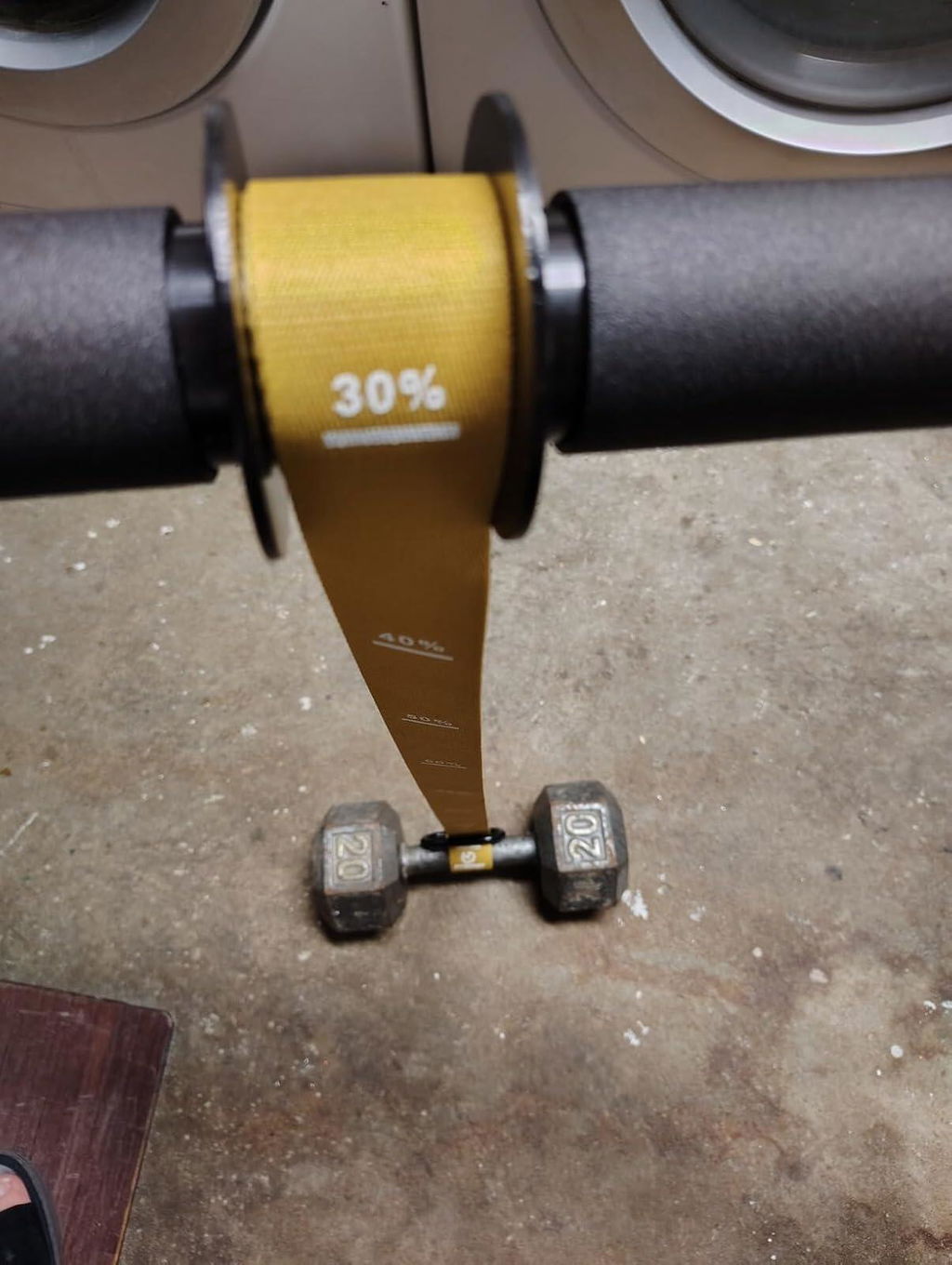
Blood flow restriction training: feel the different training pressure
Luke Heath examined the evidence for blood flow restricting training to determine whether it could benefit athletes who need a quick recovery from an injury and, if so, how it should be done.
An inevitable consequence of lower extremity injuries is muscle wasting and weakness. Rehabilitation therapists and coaches want to find ways to limit this from happening so athletes can recover quickly and safely, and prevent injuries from recurring.
A traditional training method to help athletes increase muscle size and strength is high-intensity resistance training (HIRT), which is 5-12 repetitions per set at a load intensity greater than 70% of 1RM. Multiple sets of training. However, after an injury or surgery, HIRT may not be possible. Indeed, it is more likely to cause further damage to wound healing tissue, making this type of training impossible to perform at all. In contrast, studies have demonstrated that low-intensity resistance training (LIRT) reduces the load intensity (20-50% of 1RM) with the application of blood flow restriction (BFR). ) is effective for increasing muscle size and strength.

What is blood flow restriction training?
Blood-flow-restriction training is the use of inflated, pressurized blood pressure cuffs or tourniquets around the extremities (near the proximal end of the target muscle) to limit the flow of blood to and from the contracting muscle (see Figure 1). Currently in LIRT training, there are no recommendations for applying criteria for BFR. It is important, however, to use an evidence-based and safe approach when applying BFR to resistance training. This article examines the physiology behind LIRT training with BFR, as well as its current timing and approach to lower extremity injuries at GWS Giants Football Club.
Figure 1: Blood Flow Restriction Training

During the quadriceps rehabilitation exercise seated leg extension, placing a blood pressure cuff on the upper thigh can prevent friction during the exercise, which often leads to inflammation.
The underlying mechanisms leading to muscle hypertrophy and muscle strength adaptation are not fully defined. Research theories suggest that both metabolic stress and mechanical tension contribute to the adaptation of hypertrophy and muscle strength during resistance training with BFR.
Mechanical tension - This is the process of applying mechanical tension to the muscle, which induces hypertrophy and adaptation of muscle strength. This is the stimulus that comes with traditional HIRT training. However, during LIRT training with BFR, the muscles are subject to less mechanical tension. Therefore, mechanical stress appears to play a less important role in enhancing muscle hypertrophy and muscle strength at this time. However, when athletes use BFR for LIRT training more in combination with traditional HIRT training, then the two mechanisms can work synergistically to increase muscle size and muscle strength.
Metabolic stress – It is hypothesized that exercise-induced metabolic stress induces hypertrophic effects through various mechanisms, including increased hormone secretion and recruitment of fast-twitch muscle fibers. These mechanisms are thought to mediate the signaling of muscle proteins and/or the proliferation and differentiation of muscle satellite cells that underlie muscle growth. Conflict remains between studies on whether cell swelling, muscle damage, and increases in reactive oxygen species (ROS) have physiological effects on muscle hypertrophy and muscle strength when applying BFR to resistance training.
Hormones - Metabolic stress is the accumulation of metabolites during exercise. The greater the production of lactate (metabolite) in an exercise, the more fatigued the exercise process, the greater the response to growth hormone (GH) and insulin-like growth factor (IGF-1), and therefore the greater the anabolic stimulation. Big.
Scott et al. (2015) conducted an experiment on metabolic stress and muscle hypertrophy in healthy people undergoing different exercise programs. There was no difference in training volume/load intensity between the resistance training regimens between the two programs (75% 1RM, 10 reps per set, 3-5 sets), the only difference being that the control group performed halfway through each set There is a 30 second rest period. The results showed that the blood lactate concentration (metabolic stress) in the experimental group without rest was significantly higher than that in the control group.
After 12 weeks of training, the muscle cross-sectional area of the no-rest experimental group was significantly larger than that of the control group. Under normal unrestricted blood flow, the normal load intensity of 3 × 10 LIRT sessions is not sufficient to induce metabolic stress and cause muscle fatigue. However, LIRT training with BFR, like HIRT training, can induce metabolic stress and lead to hypertrophic effects. Therefore, the purpose of LIRT training with BFR is to create a training environment in which lactic acid builds up by inducing muscle fatigue. Lactic acid is a metabolite that stimulates the production of growth hormone (GH) and insulin-like growth factor (IGF-1).
Rapid muscle fiber recruitment – Another mechanism by which LIRT training with BFR leads to hypertrophy is increased recruitment of type II muscle fibers. Recruitment of fast-twitch muscle fibers is due to the aforementioned reduction in oxygenation levels and accumulation of metabolites. Studies have shown that both the degree of activation and recruitment of type II fibers are increased during LIRT training with BFR.
When to use blood flow restriction training?
It is common for the surrounding muscles to atrophy after an injury or surgery. For example, after anterior cruciate ligament (ACL) reconstruction, the quadriceps muscle atrophies significantly within the first postoperative week. Preventing muscle atrophy and enhancing muscle strength are closely related to improving athletic performance in athletes. Therefore, restoring muscle size and strength is critical in order to allow injured athletes to return to the field safely and quickly. During the recovery phase of the acute phase, the protection of the callus is very important. HIRT training, as a traditional training modality to increase muscle hypertrophy and muscle strength, may be contraindicated because it may aggravate the injury or interfere with the healing of injured tissue. For example, after reactive patellar tendinopathy, the tendon cannot withstand the stress of HIRT training. If the athlete is subjected to high-intensity resistance training, the tendon may be more painful and may even worsen the injury.
Only three applied studies of BFR were based on the purpose of rehabilitation training. Two of these are case studies only. In a well-designed study, Ohta et al. examined the effect of a 16-week training program of BFR combined with LIRT on muscle strength of knee extensors and flexors after ACL reconstruction. The results showed that the BFR group had better effect on maintaining muscle strength before/after surgery and between injured/normal limbs. Knee extensor cross-sectional area also showed a trend toward a significant increase in the BFR group, while the control group showed no change.
While there are no more high-quality studies related to rehabilitation, there is a lot of evidence that BFR combined with LIRT can enhance hypertrophy and muscle strength. Clinically, athletes with specific injuries can benefit from this type of training to speed up their recovery process and return to the field sooner. Rehabilitation coordinators must obtain permission from a professional sports team's team doctor or surgeon before applying BFR training to athletes. Any lower extremity injury can benefit from combining BFR with LIRT.
Table 1: Guidelines for LIRT training with BFR
| Damage type | Training advice |
| Knee - ligaments, meniscus, cartilage, fractures and surgery |
1. For ligaments, cartilage, menisci, fractures, and surgery on these structures, load-strength limitation is most common in the acute phase of rehabilitation. This is to protect injured structures from stress so they can heal adequately. Once the structure has healed and can safely withstand the training load, the treating physician will give permission to begin training in combination with BFR and LIRT. 2. Anterior Cruciate Ligament (ACL) Reconstruction – Once the athlete is clearly ready to ride a bike, the BFR can be used for training. LITR training usually begins 4-6 weeks after surgery. The combination of BFR and LITR can be used for the first 2-3 months, because the athlete's biological tissue graft has not fully recovered during this time, and the knee joint may not be able to withstand high mechanical stress, so it can only accept lower load intensity Training. 3. When an athlete's knee can withstand HIRT, LIRT combined with BFR can be used as a training content on a low-intensity training day or as an auxiliary training at the end of a HIRT training day to gain more muscle hypertrophy and muscle strength. |
| Ankle - Ligaments, Cartilage, Fractures and Surgery | See the first suggestion in the box above |
| Tendinopathy - Achilles tendon, patella, quadriceps (especially in inflammatory phase) |
1. Tendon injuries occur when the tendon is hit directly, or most commonly due to a mismatch between the tendon's ability to withstand force and its actual force. This happens when the tendon is suddenly under load and/or the load changes too much. 2. Weakness of the quadriceps muscle due to atrophy is a common manifestation of patellar tendinopathy. This means that the tendon is less likely to take the load placed on it. 3. Relative rest means that stress reduction is a priority during tendon inflammation, but complete cessation of activity should not be done as this reduces the overall load-bearing capacity of the tendon. 4. Isometric contractions with moderate loads can effectively relieve pain when the tendon is in the inflammatory phase. 5. Importantly, these rehabilitation exercises do not exacerbate tendon symptoms, so care must be taken when specifying the intensity of the resistive load. Close monitoring of the athlete's tolerance to load prescriptions is recommended. This is where LIRT training combined with BFR comes in, as the athlete may not be able to handle the load intensity of HIRT at first. 6. Athletes need to transition gradually to traditional HIRT training as it creates the necessary tendon stiffness that cannot be achieved with LIRT training combined with BFR. Of course, LIRT training combined with BFR can still be used to stimulate and restore much-needed muscle size on low-intensity training days. |
| Muscle/tendon strains - calves, quadriceps, hamstrings | 1. In the acute phase of a strain injury, tissue repair and protection through stress reduction and/or complete rest is critical. The severity of the strain determines when the tissue can be re-stressed. Likewise, LIRT training combined with BFR should be the type of initial training load for restoring hypertrophy and muscle strength. When athletes can withstand the training load of HIRT, they should be "weaned." However, they can continue to use BFR combined with LIRT as an adjunct to HIRT. |
| Lower Extremity Fractures - Acute or Chronic Stress Fractures and Surgery | See the first suggestion in the first box |
Specific methods of blood flow restriction training
There are many variables to consider when applying BFR for LIRT training. These include: blood pressure cuff type and occlusion pressure, training regimen, safety considerations. Two important factors to consider when using BFR are the width of the blood pressure cuff and the internal pressure. The values of the pressure within the blood pressure cuff vary widely from study to study. The pressure in the moderate blood pressure cuff is usually 1.3 times the systolic blood pressure (>120 mmHg), or between the resting diastolic and systolic blood pressure (80-120 mmHg). It is relatively safe to apply the Sports Rehabilitation Torniquet (SRT) system, which is an inflatable blood pressure cuff with a pressure between 90-150 mmHg (ideally >120 mmHg). . For the correct application of SRT, please refer to the following link : https://www.youtube.com/watch?v=4J6KiXpl3sY(Translator's Note: China may not be able to open normally)
Training program
In the research literature on LIRT training using BFR, a typical training regimen is to complete 30 repetitions for the first set at 20-30% of 1RM, followed by 3 sets of 15 repetitions each, with between sets. Rest for 30-60 seconds. However, it is important to note that the athlete may not be able to complete the prescribed reps and sets due to injury, as this may overstress the injured tissue. This can hinder tissue healing, aggravate the injury, and even cause more damage to the athlete.
When an athlete is allowed to use BFR with LIRT training, it must be gradual and careful, and an initial training regimen may be performed with only 3 sets of 10-12 repetitions at a load intensity of 20% of 1RM. As athletes progress, they will be able to perform more reps, sets, and heavier loads. BFR can be used as an adjunctive training modality even as athletes transition from LIRT training to required HIRT training. For example, after HIRT training for the lower body, some complementary LIRT exercises can be performed to strengthen the hypertrophic effect of the quadriceps femoris muscles, such as single-leg squats or knee extensions with BFR.
When an athlete's training is dominated by HITR, a combination of BFR and LITR can also be used on the athlete's low-intensity training days. For example, if an athlete completes HIRT training 3 times per week, BFR can be used in conjunction with LIRT training on the other two days (see Table 2).
Table 2: Sample weekly training plan including HIRT training and BFR combined with LIRT training
| Monday | HIRT |
| Tuesday | LIRT+BFR |
| Wednesday | HIRT |
| Thursday | Off day |
| Friday | HIRT |
| Saturday | LIRT+BFR |
| Sunday | Off day |
When using BFR with LIRT training, it is important to create metabolic stress, so short rest intervals are key. It is not necessary to train muscles to failure. Training to failure is a form of high-volume training that may place excessive mechanical stress on the injury site. The recommended training programs for BFR combined with LIRT are shown in Table 3. To allow metabolites to build up, tourniquet pressure should be maintained throughout all sets of each exercise.
Table 3: Training scheme for combining BFR with LIRT
| Load intensity | 20-50% of 1RM |
| Number of groups | 3-6 |
| Frequency | 10-15 |
| Rest between sets | 30-60 seconds |
| Training frequency | 2-4 times a week |
Security considerations
Research shows that combining BFR with LITR is a safe way to train. Precautions are also essential because the use of hemostatics carries the risk of blood clotting and venous thrombosis.
Caution should be exercised when BFR training is performed on individuals with poor vascular status or postoperative patients undergoing any lower extremity surgery.
When using an SRT hemostatic cuff, the pressure ranges suggested above are unlikely to cause any damage to the soft tissue structures under the cuff.
Permission from a sports physician or surgeon must be obtained before BFR training, and normal safety considerations should be followed with regard to the injury healing process.
Summarize
Studies have shown that combining LIRT with reduced load intensity with BFR is effective in increasing muscle size and strength. More research is needed on the use of BFR with LIRT in injured populations. Through the principle mechanism described above, the combination of BFR and LIRT is a useful training tool for early rehabilitation of injured athletes and as an adjunct to HIRT. HIRT training cannot be forgotten, as this traditional training style is important for building muscle strength and muscle size, which are critical in the post-rehabilitation phase before returning to the game.