How to Use a Forearm Trainer: Load Selection, Rolling Control, and Progression Guide
A forearm trainer uses a hanging load to challenge the wrists, forearms, and grip. If you are new to wrist roller training, the goal is not to use the heaviest load possible. The goal is to find an appropriate working load and maintain control throughout both the rolling and lowering phases.
What Does a Forearm Trainer Train?
Using a forearm trainer requires both hands to maintain a stable grip while the wrists and forearms control the load as it moves upward and downward.
This type of training can challenge forearm strength, wrist control, grip endurance, and movement coordination. FitBeast forearm training also uses strength, control, endurance, coordination, and recovery as different training focuses.
Targeted wrist and forearm resistance training has an established training basis. Research has shown that adding specific wrist and forearm exercises to a resistance training program can improve several measures of wrist and forearm strength.
The purpose of wrist roller training is therefore not simply to get the weight to the top. It is to develop stable and repeatable wrist and forearm movement under load.
How to Choose and Attach the Right Load?
If you are using the forearm trainer for the first time, begin with a lighter load while learning the movement.
An appropriate load should allow you to roll the weight upward smoothly and remain in control while lowering it. If the movement becomes noticeably faster or unstable, your wrist position changes significantly, or your shoulders and body begin helping with the movement, the load may be too heavy.
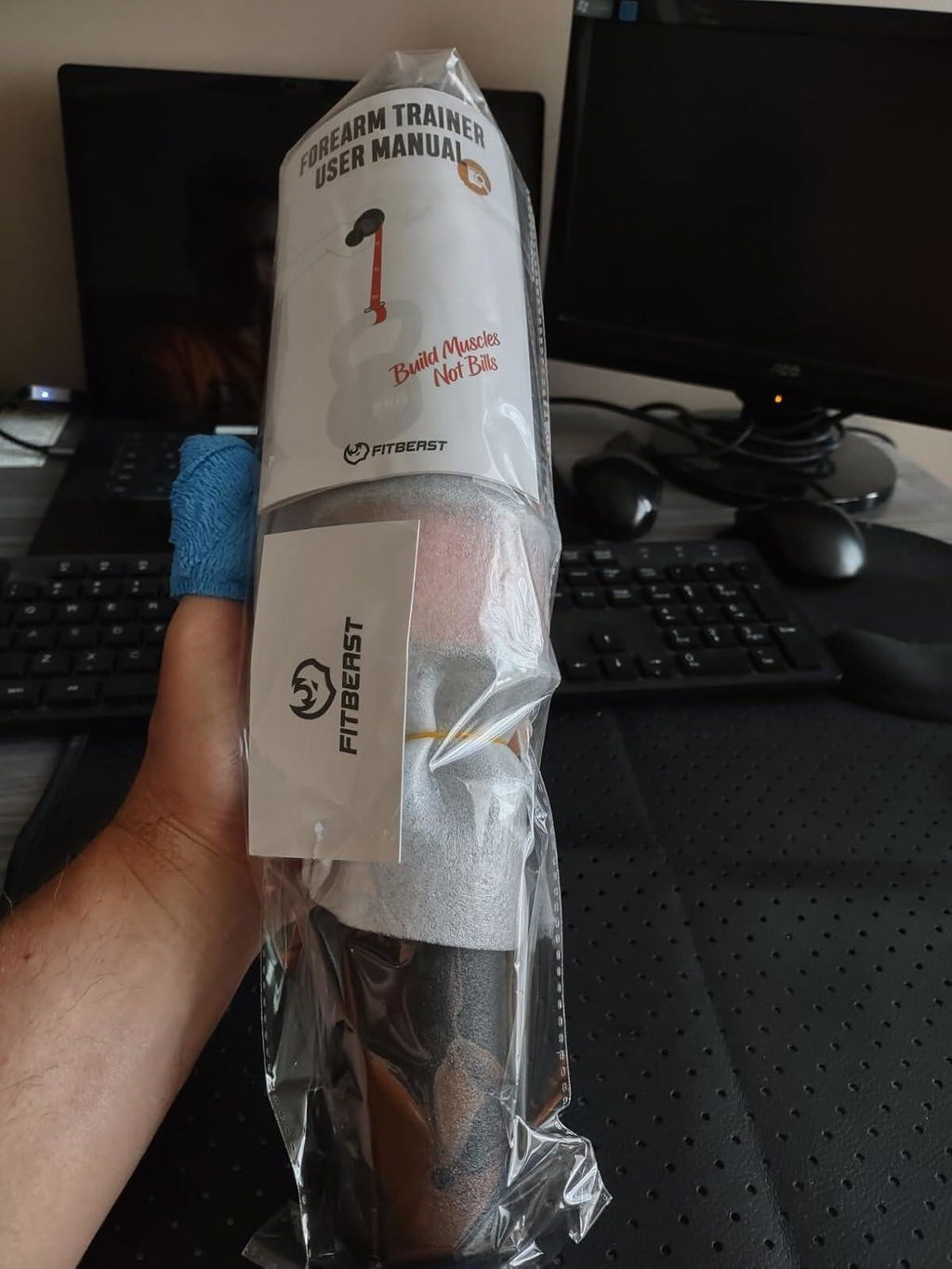
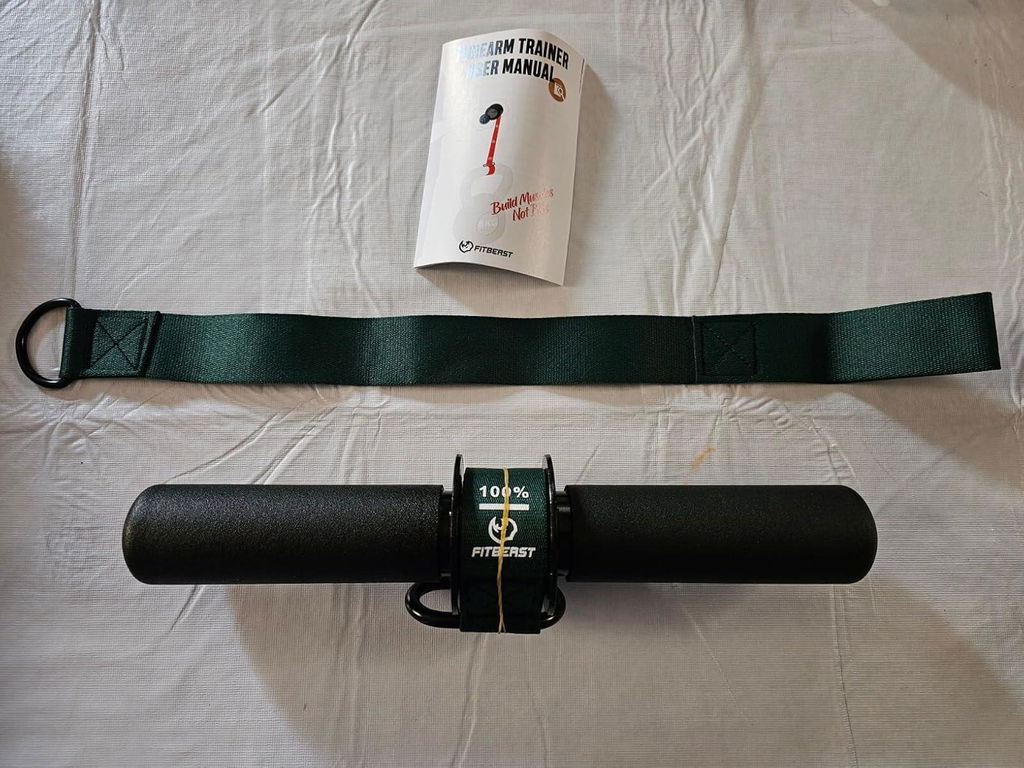
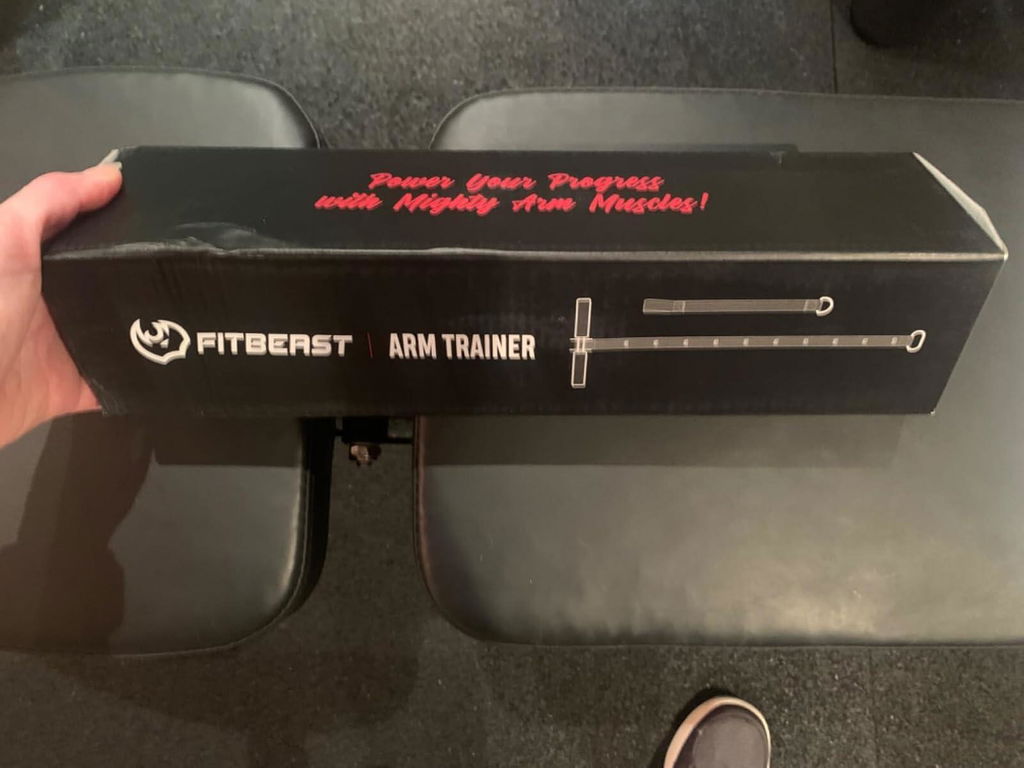
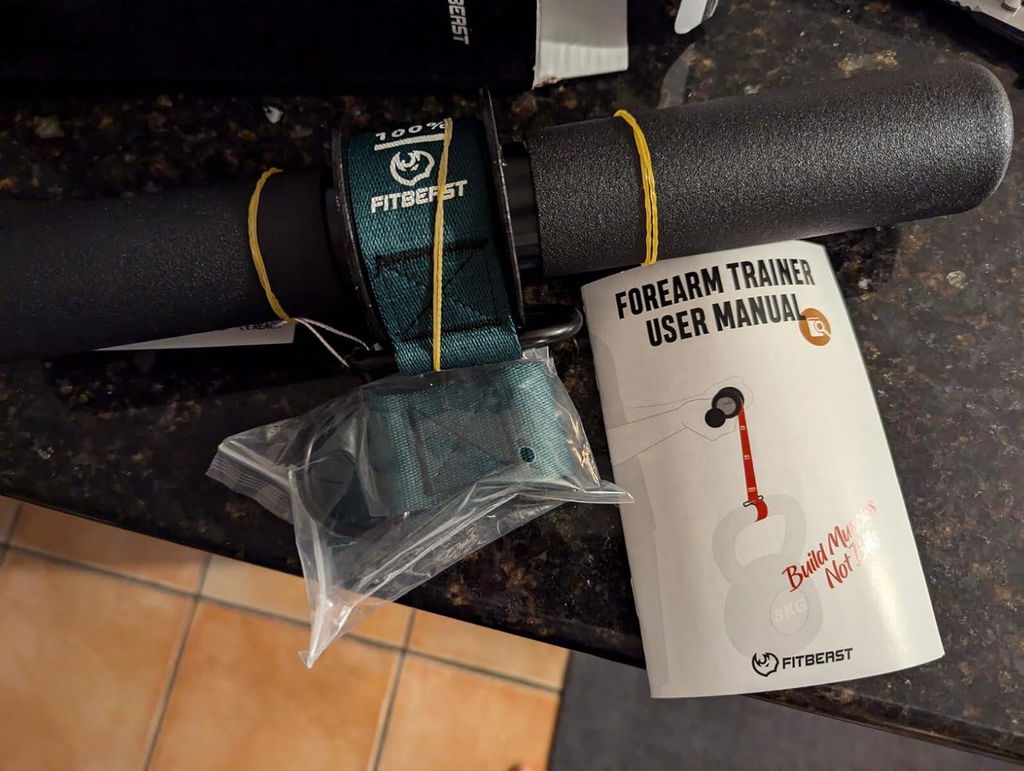
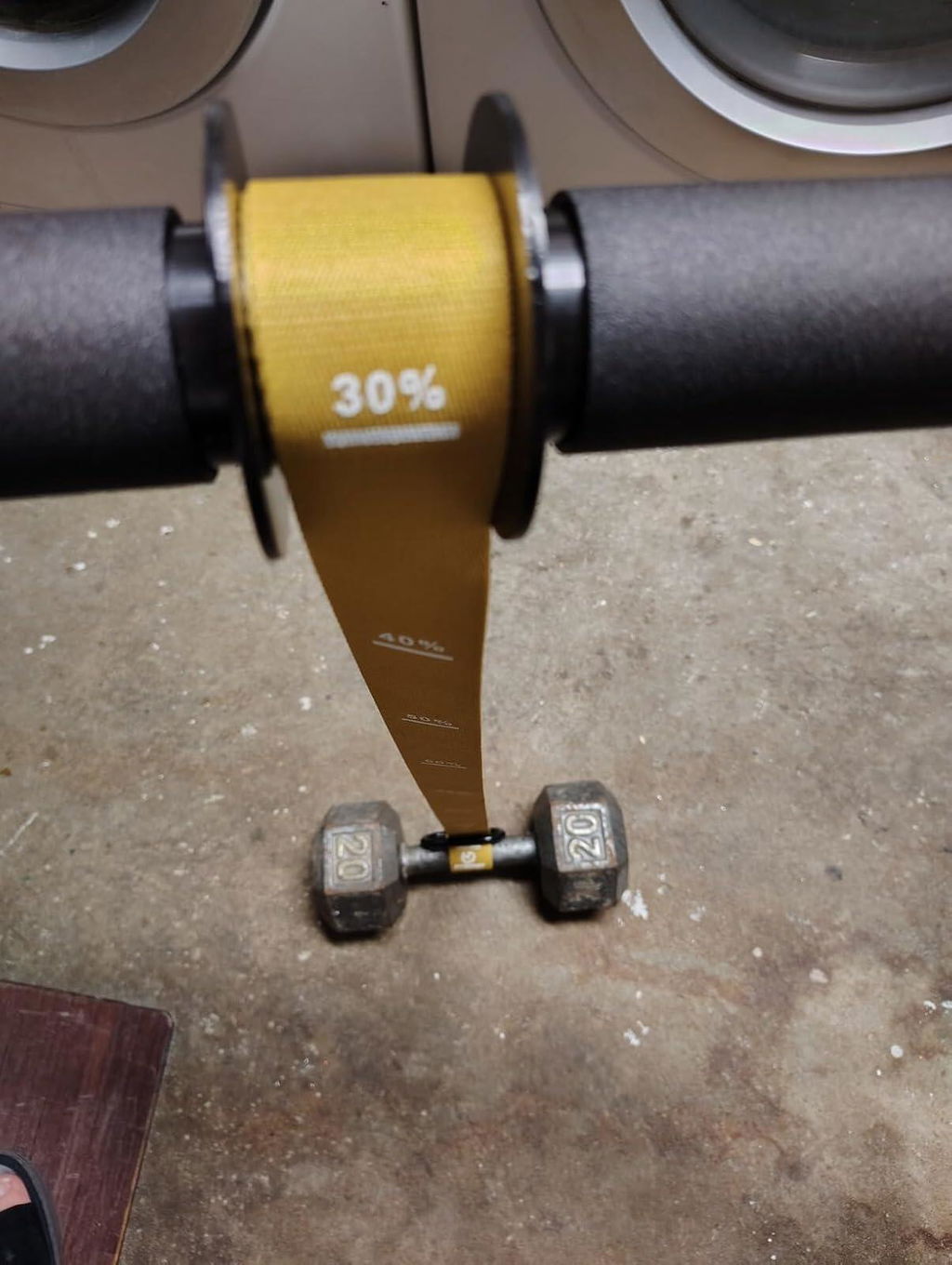
The FitBeast Forearm Trainer can be used with several types of loads, including dumbbells, barbell plates, kettlebells, water bottles, and backpacks. The Extension Strap can be used when additional length is needed for larger or irregularly shaped loads.
Before every session, make sure the strap, attachment point, and load are secure. The load should hang freely with enough space to travel upward and downward without obstruction.
Once your current load can be managed consistently with stable movement, increase the training challenge gradually. This follows the general principle of progressive resistance training, in which training demands are adjusted as your ability improves rather than beginning with the highest possible load.
Why Rolling Up and Controlled Lowering Both Matter?
Rolling the weight upward is only one part of the complete movement.
Once the load reaches the top, avoid allowing it to drop quickly. Continue using your wrists and forearms to control the handle and lower the load smoothly toward the starting position.
During controlled lowering, the muscles continue to produce force under load and may perform an eccentric muscle action. Eccentric resistance exercise is an established form of resistance training. Systematic review and meta-analysis evidence has shown that eccentric resistance training can provide an effective stimulus for strength and muscular adaptation in healthy adults.
The lowering phase should therefore not be treated simply as rest after the upward roll. Rolling upward and lowering with control are both parts of the complete training movement.
How to Maintain Proper Rolling Technique?
Hold the handles securely with both hands and allow the wrists and forearms to perform the main rolling action.
Maintain a steady pace instead of rapidly spinning the handle to complete more repetitions. Keep the shoulders and upper body as stable as possible and avoid shrugging, swinging the body, or using large arm movements to help lift the load.
Maintain control as the load moves upward and continue controlling it on the way down. Stable and repeatable movement is more important than simply increasing speed or repetition count.
If you are using the FitBeast Forearm Trainer for the first time, use the Quick Start to learn load attachment, basic grip position, and product setup.
Common Forearm Trainer Mistakes
One common mistake is failing to secure the load before training. Always check the strap and attachment point so the load does not shift or detach during the movement.
Another mistake is increasing rolling speed simply to complete more repetitions. Moving too quickly can reduce wrist and forearm control.
Using the shoulders or body to help complete the movement is another common problem. If the exercise begins to depend on upper body movement rather than wrist and forearm control, reset your technique or reduce the training difficulty.
Avoid allowing the load to drop quickly during the lowering phase. Control should continue even after the weight has reached the top.
Mild muscular fatigue may occur during training, but stop if you experience sharp pain, numbness, or tingling. The FitBeast Forearm Trainer is intended for general fitness and hand training and is not a medical device.
How to Progress Your Forearm Training
Progress does not mean that you need to add more weight every session.
Once your current training can be completed with stable control, you can gradually add high quality rolling repetitions, increase training rounds, extend working time, improve movement quality, or increase the load when appropriate.
Adjusting one main training variable at a time makes it easier to understand how your body responds and helps prevent movement quality from being sacrificed simply to make the exercise harder.
Recovery is also part of progression. If significant wrist or forearm fatigue remains after the previous session, reduce the next training workload or allow additional recovery time. Not every session needs to be performed at maximum effort.
A simple principle is to master your current workload before increasing the challenge.
Frequently Asked Questions
How much should I do in one session?
Different training goals and stages require different training volumes, so the same repetition target should not be applied to every session. Maintaining stable movement throughout the planned work is more important than chasing a fixed number. If the movement becomes noticeably faster, less controlled, or requires body compensation, stop adding repetitions.
How often should I use a forearm trainer?
Training frequency should reflect training intensity, fatigue, and recovery. Not every day needs to include high effort forearm training. If significant fatigue remains from the previous session, reduce the training workload or allow additional recovery time.
What should I do if my wrists or forearms hurt during training?
Stop if you experience sharp pain, numbness, or tingling. Mild muscular fatigue may occur, but pain should not be treated as a normal training goal. If you have an existing wrist, elbow, or forearm injury, medical condition, or recent surgery, consult an appropriate healthcare professional before training.
Build Control First and Progress from There
Forearm trainer workouts are not about continuously adding more weight. The goal is to develop stable and repeatable rolling control with an appropriate load, then increase the challenge gradually as your ability improves.
If you are using the FitBeast Forearm Trainer for the first time, begin with the Quick Start to learn load attachment and basic product use.
Once you are comfortable with the basic movement and want a more structured way to progress, continue with the FitBeast 14-Day Training Plan for guided training over time.
References
1. Currier BS, D'Souza AC, Fiatarone Singh MA, Lowisz CV, Rawson ES, Schoenfeld BJ, Smith-Ryan AE, Steen JP, Thomas GA, Triplett NT, Washington TA, Werner TJ, Phillips SM. American College of Sports Medicine Position Stand. Resistance Training Prescription for Muscle Function, Hypertrophy, and Physical Performance in Healthy Adults: An Overview of Reviews. Medicine & Science in Sports & Exercise. 2026;58(4):851-872. doi:10.1249/MSS.0000000000003897.
2. Szymanski DJ, Szymanski JM, Molloy JM, Pascoe DD. Effect of 12 Weeks of Wrist and Forearm Training on High School Baseball Players. Journal of Strength and Conditioning Research. 2004;18(3):432-440. doi:10.1519/13703.1.
3. Roig M, O'Brien K, Kirk G, Murray R, McKinnon P, Shadgan B, Reid WD. The Effects of Eccentric Versus Concentric Resistance Training on Muscle Strength and Mass in Healthy Adults: A Systematic Review with Meta-analysis. British Journal of Sports Medicine. 2009;43(8):556-568. doi:10.1136/bjsm.2008.051417.